
EASTERN PART OF THE COMPLEX
Enjoyment and Entertainment
According to the original design from 1893, the gallery with glass-paned semi-circular arcades in the eastern part of the Governor's Palace housed a conservatory (Fr. orangerie), followed by a quaint structure serving as a garden pavilion.
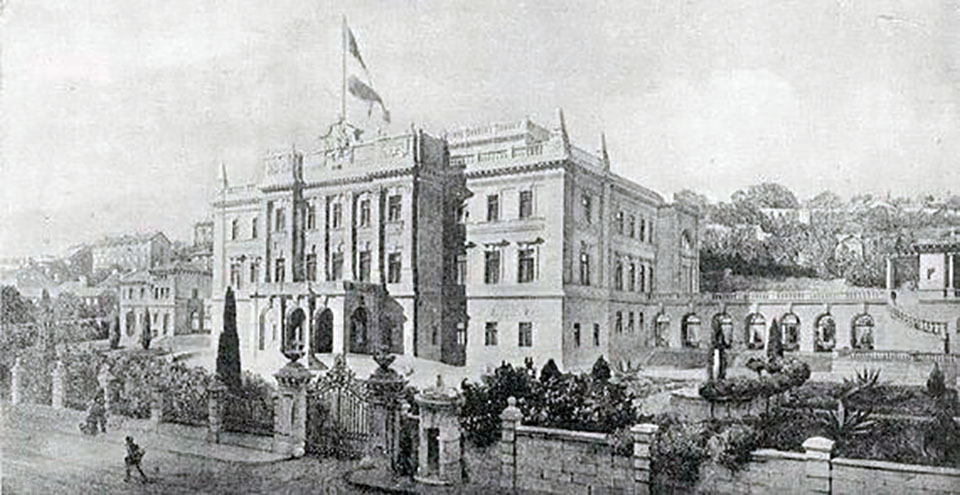
The terrace on the conservatory's roof is at the level of the Palace's first floor, and the opening of auxiliary passages from the Marble Hall and the Yellow Salon, on the eastern outer wall, facilitated communication with the garden pavilion. The conservatory roof terrace, enclosed by a low stone balustrade, is followed by an elegant semi-circular staircase connecting it to the park along the pavilion’s western wall. The communication connecting the first floor spaces of the Palace with the leisure and relaxation allowed its use by the governor’s official guests and participants in ceremonies.
The conservatory was intended for the protection of Mediterranean plants, mostly citrus and decorative plants that were moved from the garden into the enclosed space during colder months. Such spaces required large glass surfaces, ventilation and heating systems. Conservatories were status symbols from the 18th century onward and an indispensible part of the villas and palaces belonging to the wealthy. This is why one was designed for the palace of Rijeka’s governors.
The garden pavilion was intended for social gatherings, entertainment, enjoying nature and casual conversations. Its original façade with a large rectangular opening indented by two pillars did not have glass panes, and the eastern wall doors had a canopy which was also placed on the western wall in order to preserve its symmetry.
The first significant reconstruction of the park and structures on the eastern and western parts of the Governor’s Palace complex took place in 1939, under Italian rule. The stone staircases were repaired along with sculptures and fountains in the park and the monumental wall that encloses the grounds. New terracotta and marble floor tiles were placed in certain parts of the park and new plants were planted.
After World War II, when the Palace was conferred to the Central Culture Hall, the park was open to the public for the first time. New benches were installed, and mothers with children in particular were encouraged to spend time in the park. The park was open from 7 a.m. to 8 p.m., and a full-time guard was employed there until 1970s.
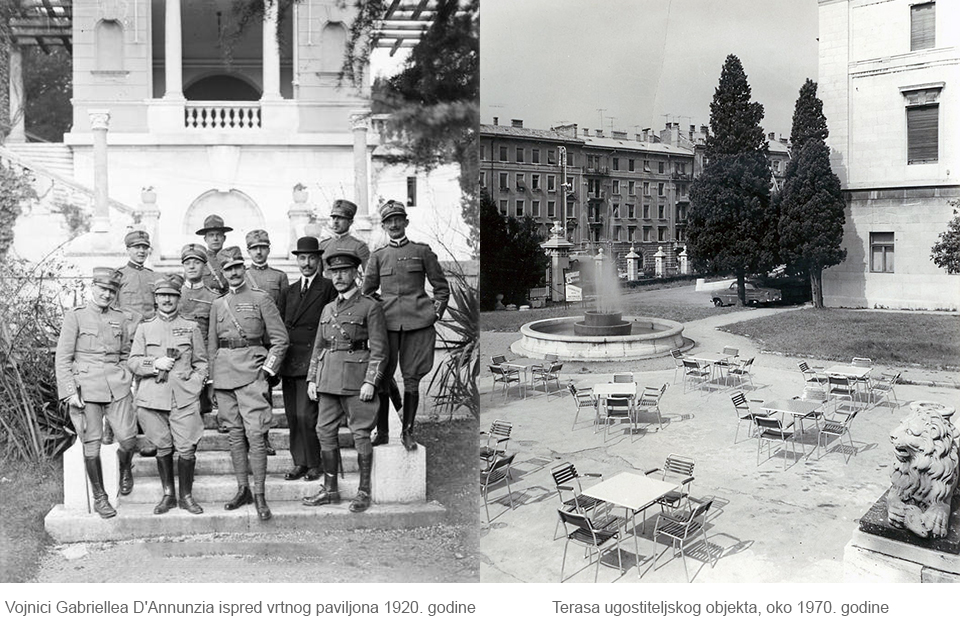
The former conservatory became home to the Culture Workers’ Club and later to the Rijeka Museology Society, which turned it into a luxury hospitality facility serving the finest food and beverages.
Hospitality services were provided in the conservatory building in the form of a luxury restaurant, a night club and also the canteen for the Internal Affairs Secretariat until the early 2000s, when the lease contracts were not renewed due to poor technical conditions, mostly pertaining to leaks and excessive dampness.
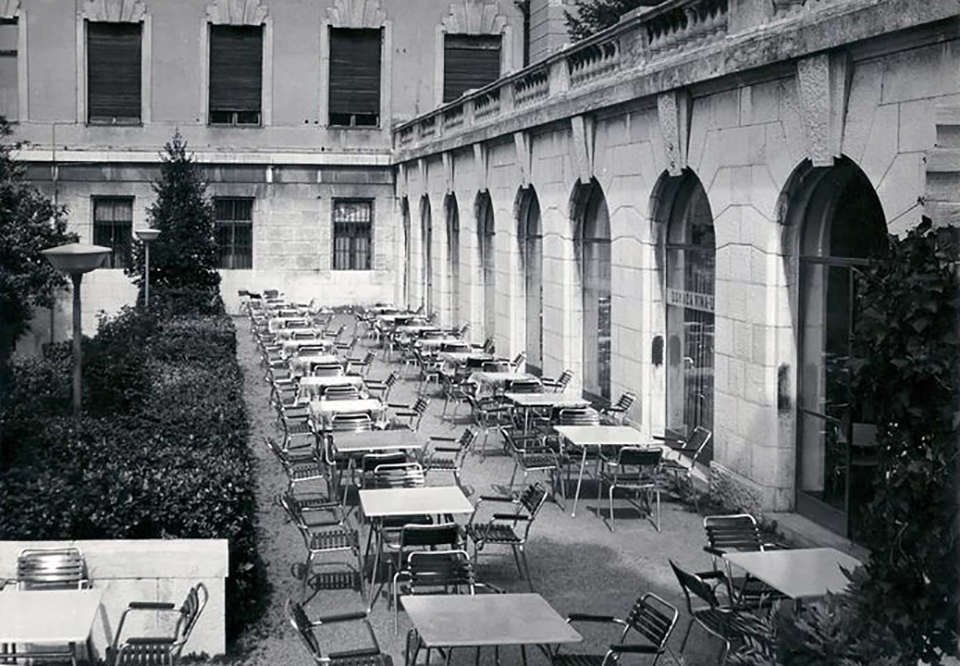
Today the space is mostly used to host exhibitions, lectures and workshops. As of 2015, emphasis was placed on the need to reconstruct and revitalize the space through the Summer at the Guver activities.
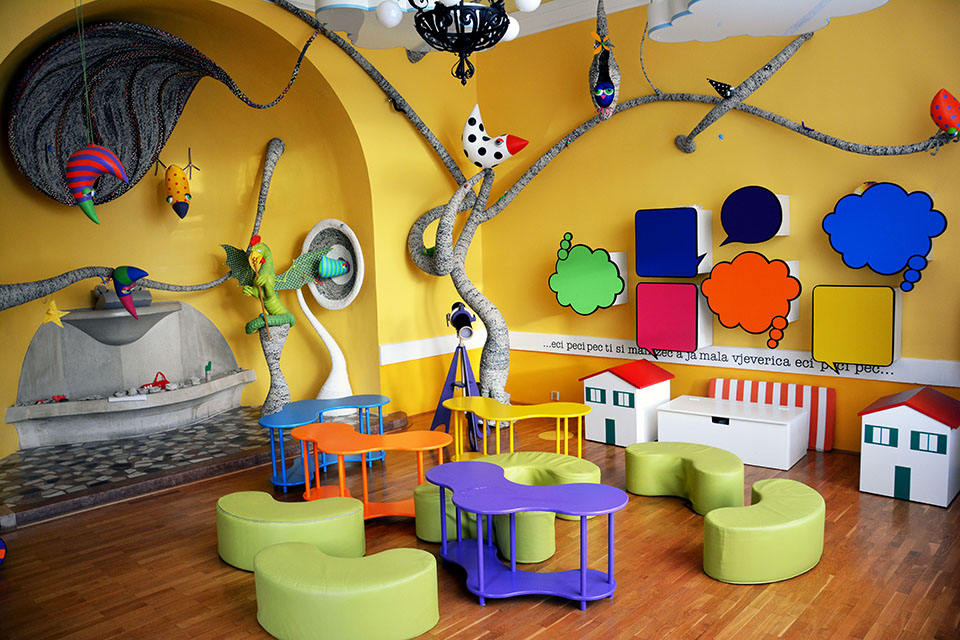
The garden pavilion was used by the office of the Melodies of Istria and Kvarner (MIK) festival for several years, beginning in 1993, while during the remaining time it was mostly used as a storage space. It was renovated in 2013, including roof reconstruction and interior refurbishing. Today it is home to The Miracle Room, thematic museum workshops for children, and the permanent display of the Toys and Games Collection. The space is decorated with installations and sculptures by Ivana Postić and Matej Vočanec.