

MARBLE HALL
The most luxurious part of the Palace is the ceremonial ballroom that is two stories high (1st and 2nd floor) in the north-eastern part of the building. A small room on its western side was symbolically separated from the central space by a curtain, while the loggia above it, accessed by a spiral staircase, was reserved for the orchestra. It features wooden, gilded and upholstered benches that have been preserved, and chairs which were known to have had woven reed seats.
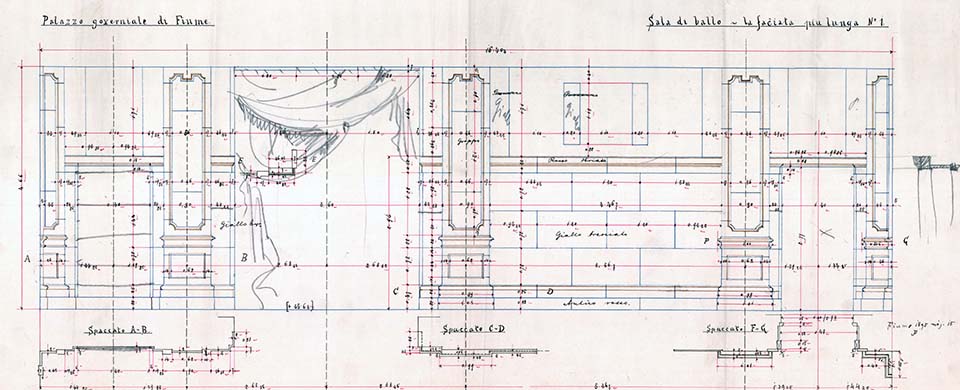
The room was mostly used as a ballroom Hungarian rule, soon after which that name was no longer used. Today it is mostly referred to as the Marble Hall, thanks to the impressive marble-lined walls. During Hungarian rule, the Hall staged balls on a regular basis, announced in daily newspapers. The balls were part of high society life, gatherings and entertainment for prominent citizens. The Waltz was an imperative, while the Polka, Quadrille and Mazurka were frequent elements. Dancing skills were considered a mandatory part of socially acceptable cultural behaviour and an indicator of social status. The higher classes deemed a lack of dancing skills tantamount to illiteracy.
Decorative stucco-framed mirrors were placed above the marble lining to welcome Italian King Emanuel III in 1924, replacing the originally designed official portraits of Rijeka’s governors made after the original paintings in the City Hall.
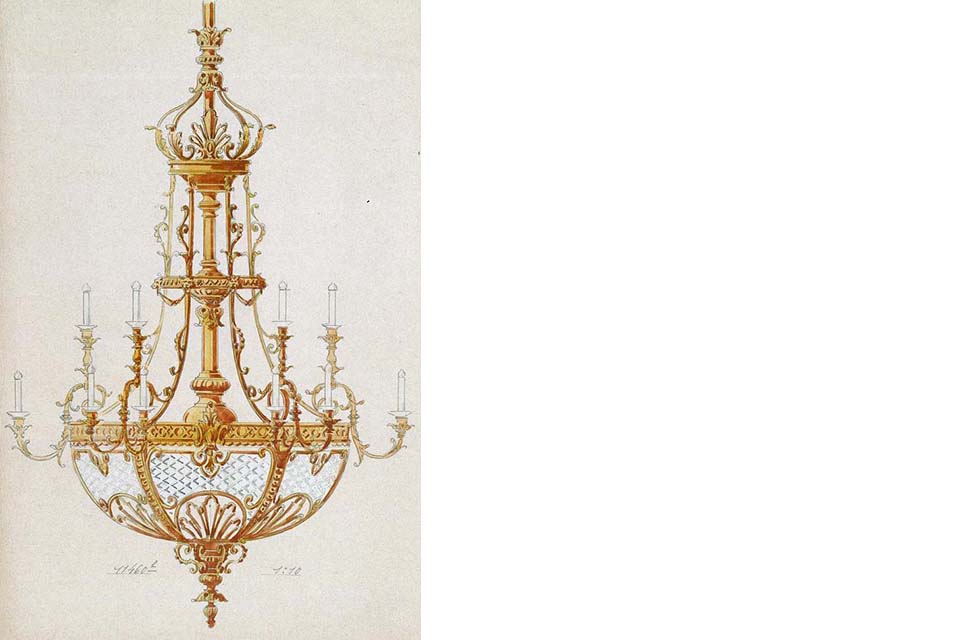
Large semi-circular windows are located within the lunettes on the north side and the vault is decorated with rich stucco decorations. The Hall’s three impressive chandeliers and the one in the space below the orchestra loggia are part of the original inventory, while the sconces were added later. The oak parquet floor has been preserved.
The east ballroom door leads to the conservatory terrace, with a view of the Palace’s garden and the city, while the west door leads to the Yellow Salon, originally a waiting room.
After World War II, the Palace was managed by the Culture Hall under which the National University operated and used the Hall for lectures and, thanks to the Hall’s acoustic features, for concerts organized by the Concert Office. After 1953, when the Museum was granted management of the Palace, the Hall has been used as exhibition space. Since the 1970s, it has often been leased to companies, embassies, associations and PR agencies for their gatherings, special events, symposiums, business conferences and promotions.