

WALKING THROUGH THE PALACE
Alajos Hauszmann's 1893 original design included representative and protocol rooms in the Palace, along with private living quarters for the governor and rooms for the staff and servants.
Considering the differences among the three major groups of people (staff and servants, official visitors and the governor and his family), separate communication paths were required to prevent them from intersecting.
The most beautiful and luxurious parts of the Palace were intended for the governor’s official protocol, the reception of guests and balls. They are mutually linked by communication paths.
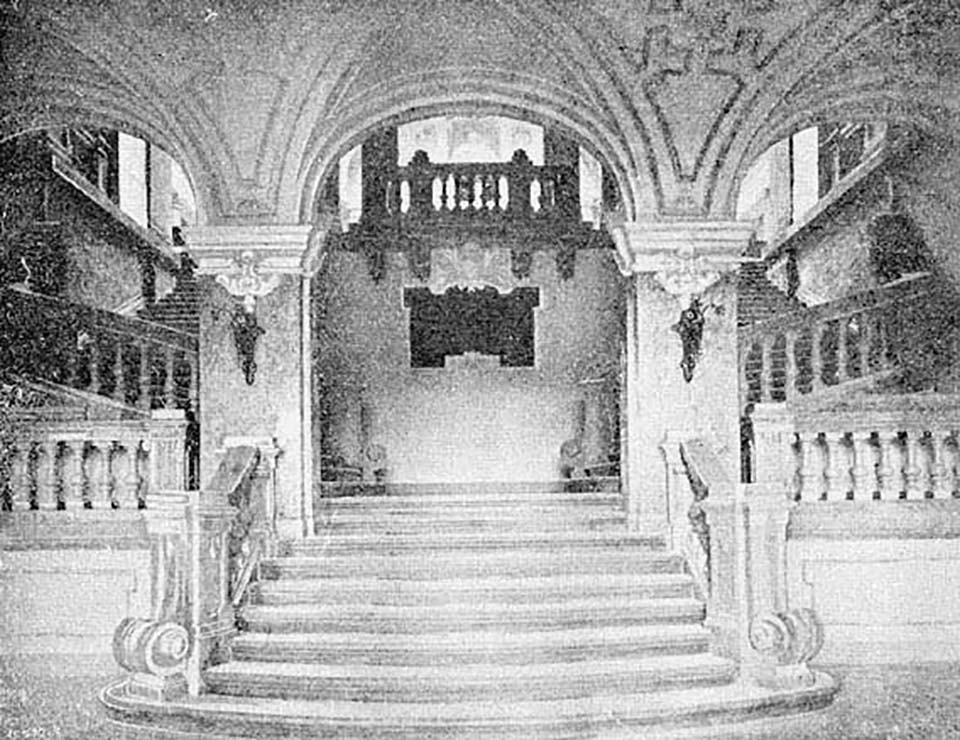
The major path leads from the main entrance through the vestibule and monumental staircase to the Atrium on the 1st floor. The staircase has two sections separated by a small landing where attention was drawn to a dedication plaque that was later removed, most probably immediately after the end of World War I when the last Hungarian governor handed over the Palace. The staircase was later lit by two fixtures designed by early 20th century German sculptors to resemble women. The figures might be considered allegorical since they bear symbols of Rijeka’s first coat of arms conferred to the city by Habsburg Emperor Leopold I in 1659.
From the landing, the staircase splits into two symmetrical oval parts leading to the southern side of the square-shaped Atrium. Six doors lead from the Atrium to the salons that surround it and that are interconnected, and to the ballroom with a terrace that leads to the garden pavilion in the Palace’s eastern wing. A door at the north-western corner of the Atrium leads to the guest quarters. These communication paths have been completely preserved and are still respected in the light of the Palace’s new function.
The route intended for the governor and his family and governesses is a rational and functional one.It leads from the main entrance through the vestibule to a small, relatively simple staircase on the right, eastern side of the Palace to his quarters on the 2nd floor. The staircase can also be used to enter the first floor, thereby simplifying access to the official and showcase rooms, including governor’s study in the eastern wing. The staircase was originally lit by natural light passing through the skylight.
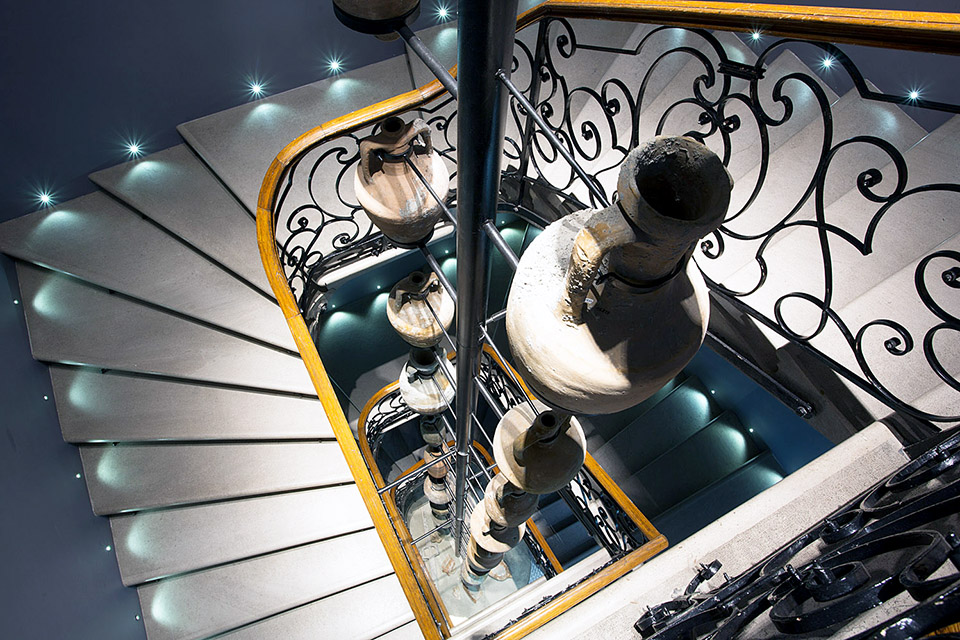
The third communication path is “hidden” behind showcase rooms and intended for staff and servants. Architect Alajos Hauszmann paid special attention to the path, as it needed to provide vertical and horizontal links between auxiliary rooms like the kitchen and servant quarters (in the outbuilding in the western part of the grounds) and the cellar and boiler room (in the northern part of the Palace’s ground floor, behind the vestibule), with the serving and dining rooms on the 1st floor and the governor’s private dining room on the 2nd floor, without intersecting the other two paths. A side entrance to the main building was designed for the needs of this path. Over time, this route was no longer used. The Palace’s ground floor was used after World War II for business purposes, as office space and apartments, leading to remodelling and intersections of the corridors, depending on the momentary needs. Therefore, this communication has only been partially preserved.